Australian mid-market Shopify stores we audited in the week to 23 July had no reviews, ratings or customer proof visible anywhere on the buying path — not on the homepage, not on product tiles, not on the product page itself.
Not tiny hobby stores, either. These are established brands — apparel, footwear, jewellery, activewear, gifting, homewares — with real catalogues, real communities, and product pages asking for $150 to $260 a time. The single most common thing our audits turn up isn't a broken checkout or a slow theme. It's silence: a shopper about to spend $200 with a brand they've never bought from, and not one other customer anywhere in sight.
Why it's a leak, not a nice-to-have
A first-time visitor lands on your product page with exactly one question: can I trust this? They don't know your fabric is good, your sizing is true, or your community is real. You know those things. Your regulars know. The page doesn't say so.
Reviews answer the trust question at the exact moment it's being asked, in a voice shoppers believe more than yours. That's the whole mechanism — no growth-hack magic, just borrowed credibility at the decision point. Remove them and every new customer has to take your word for it, at full price, with their own money.
The stores that get this right make it unmissable. The strongest storefronts we audited this week — the ones we couldn't find much wrong with — all do the same three things: star ratings on product tiles, a review count in the thousands sitting next to the price, and a press or UGC bar backing it up on the homepage. That's not a coincidence. It's the difference between telling people you're good and showing them everyone else thinks so.
What it looks like in the wild
Three of our published teardowns document the same gap, in three different flavours:
- A graphic-apparel brand with a big catalogue — no review app scripts, no AggregateRating markup, zero visible social proof on a store that's been selling since 2018. Documented in our public sample teardown.
- A footwear brand with $260 product pages — genuinely strong shipping and returns offers, but no ratings anywhere on the pages doing the selling. Full write-up in the Rollie Nation teardown.
- A swimwear brand with a proper cult community — thousands of fans who would happily vouch for it, and not one of them visible on the homepage, collections or product pages. See the Budgy Smuggler teardown.
Check your own store in five minutes
- Open your best-selling product page in a private window, on your phone.
- Scroll from the top to the add-to-cart button. Count the customer voices you pass: stars, review counts, photos, quotes. If the answer is zero, that's the leak.
- Do the same on the homepage and one collection page. Tiles with no ratings are anonymous products.
- View source and search for aggregateRating. If it's not there, Google has no stars to show in your search results either — so the leak starts before anyone even reaches your site.
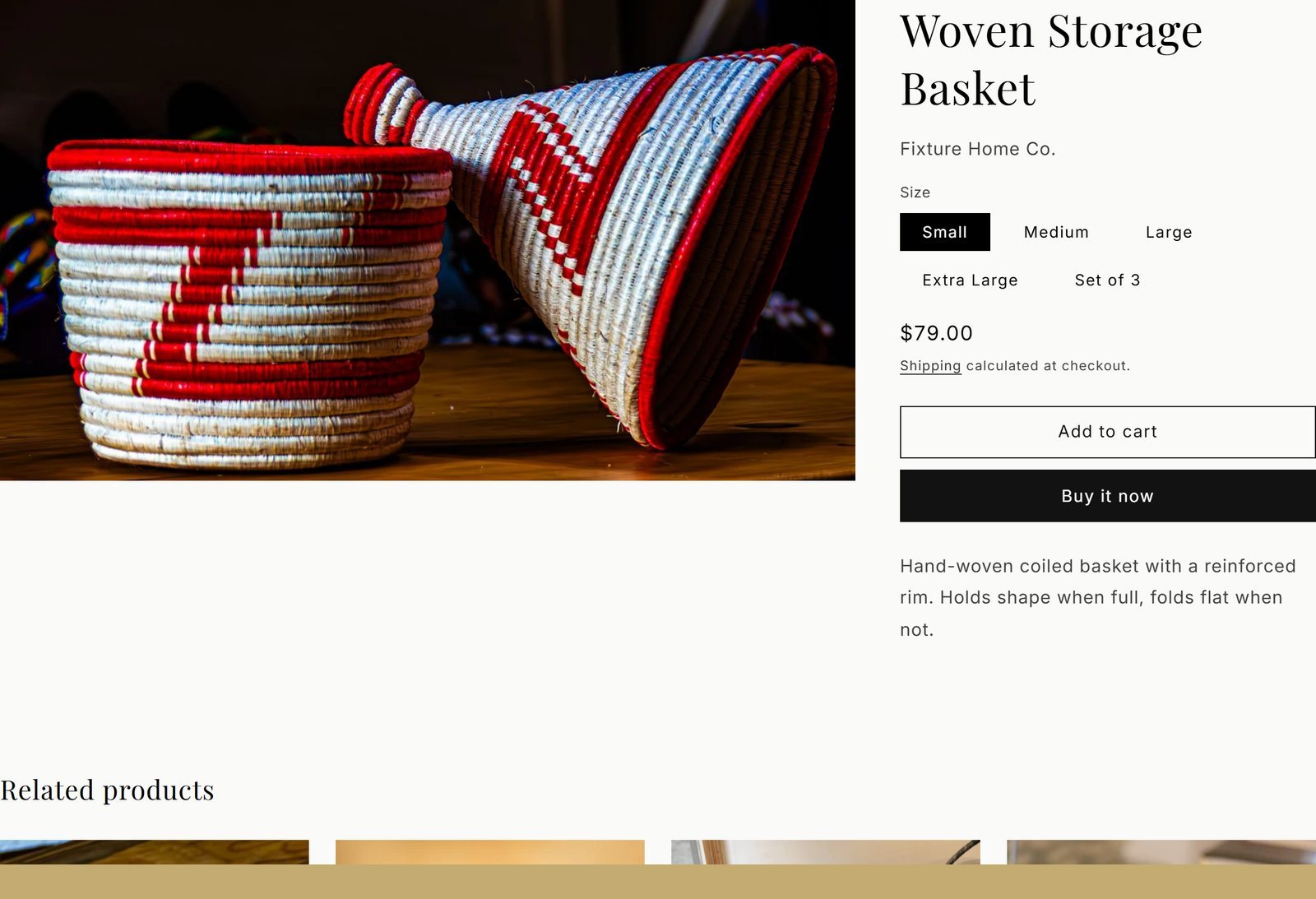
BeforeNothing between the price and Add to cart. No evidence anyone has bought this.
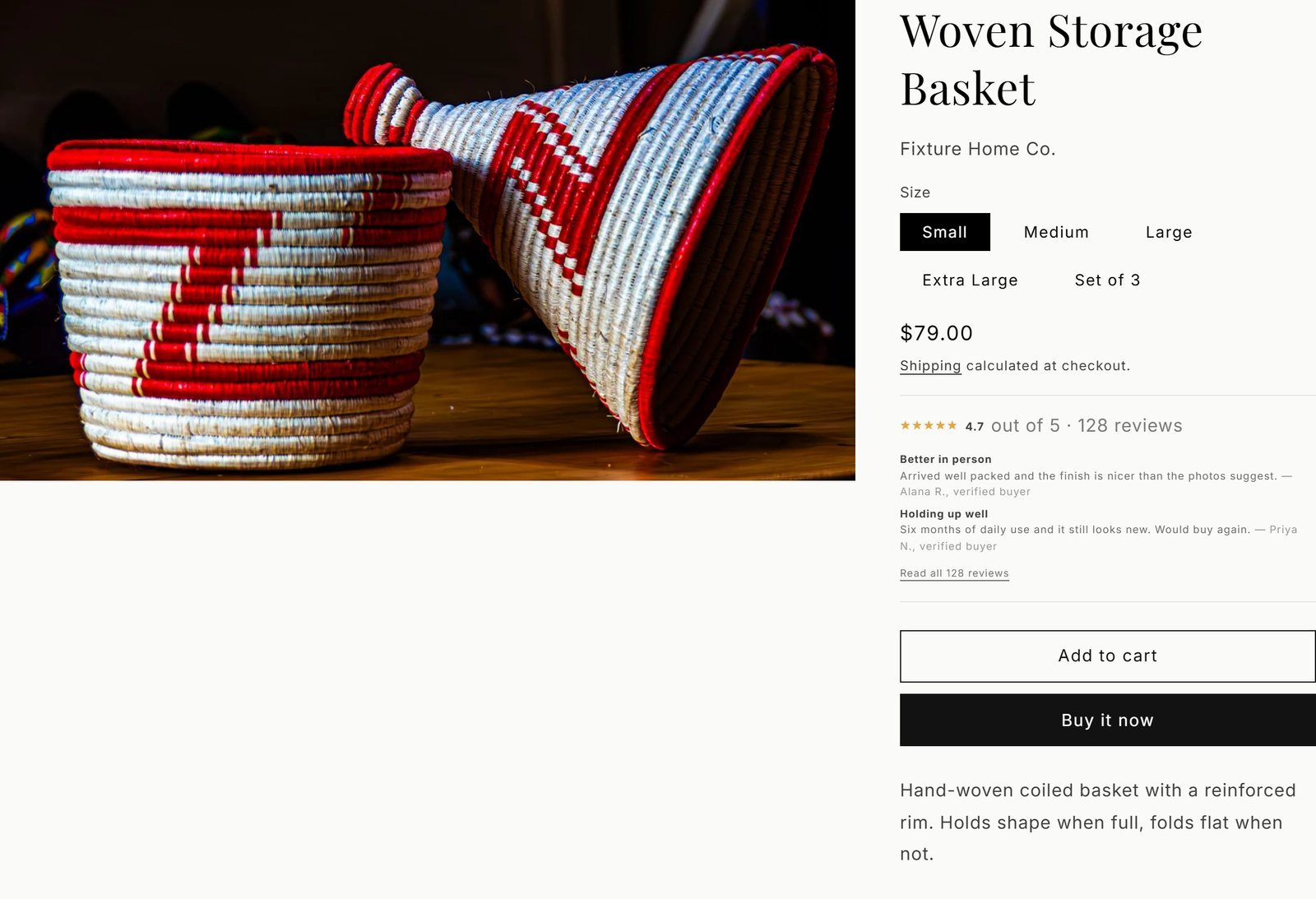
AfterRating, count and two recent reviews at the decision point, plus AggregateRating markup.
About these screenshots: taken from a demonstration store we built and control, so the defect and its fix can be shown on the identical page. It is not a real merchant’s shop — the stores cited above are.
The fix, in four steps
1. Install a reviews app — the free tier is fine
Judge.me, Loox, Okendo, Shopify's own Product Reviews successor — for a mid-market store the differences matter far less than having one live. An afternoon of work.
2. Backfill from the customers you already have
You don't start from zero; you start from your order history. A single email to past customers — plain, honest, "tell us how it went" — typically gets the first meaningful batch of reviews in. Never fake them, never buy them: fabricated reviews are illegal under Australian Consumer Law and, worse, shoppers can smell them.
3. Put the numbers where the deciding happens
Stars and counts on product tiles, the rating next to the price on the product page, the review body below the fold. Homepage gets the aggregate ("4.8 from 2,100 customers") not a wall of quotes.
4. Add AggregateRating structured data
Most review apps emit it automatically once configured — check with Google's Rich Results test. This is what earns star snippets in search results, which is the same trust signal working for you before the click.
The honest caveats
If you're a young brand with forty orders, a review app won't transform you overnight — seed it from those forty customers and let it compound. If your product genuinely disappoints people, reviews will say so; fix the product first. And social proof is one leak of several — the same audits found shipping answers missing at the decision point on 13 of those 21 stores, and weak or absent email capture on 16. The stores leaking worst are usually leaking in more than one place.
We'll map the leaks across your whole store, not just this one.
A 40-point revenue-leak teardown — speed, product pages, trust, email flows, SEO, checkout friction — delivered as a prioritised fix roadmap in 48 hours. Fixed A$695, no retainer. Fewer than 5 actionable fixes and we refund in full.
Not sure whether any of this applies to your store? Get a free scan — we render your storefront in a real browser and email you what we find. No card, no call.
or read the full sample first →