Speed & script bloat
Core Web Vitals, dead app scripts still loading, hero media weight, lazy-loading done wrong.
A 40-point teardown of your Shopify store — speed, product pages, trust, email flows, SEO, checkout friction — delivered as a prioritised fix roadmap in 48 hours. No call. No retainer. No deck.
Scan my store — free Book a teardown — A$695The scan is free and emailed to you. Or read a full published teardown first.
No walls of screenshots, no "best practice" filler. This one's lifted straight from our public sample teardown of a real Australian store — judge the depth before you spend a dollar.
Fix: reviews app (free tier is fine), backfill campaign to past customers, AggregateRating JSON-LD for star snippets in Google. Effort: 1–2 days.
Every teardown ends with a change your developer can make. Here are the three most common findings from our own audits, before and after — same page, same crop, only the fix differs.
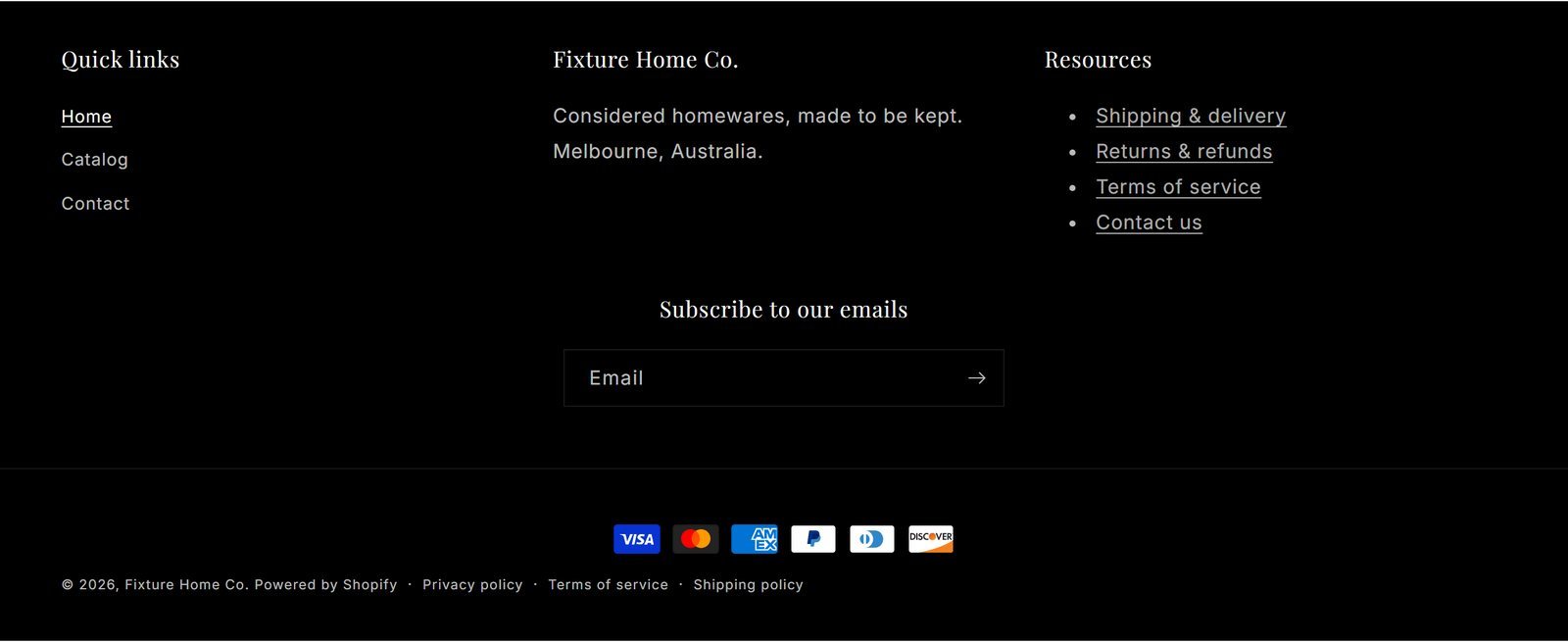
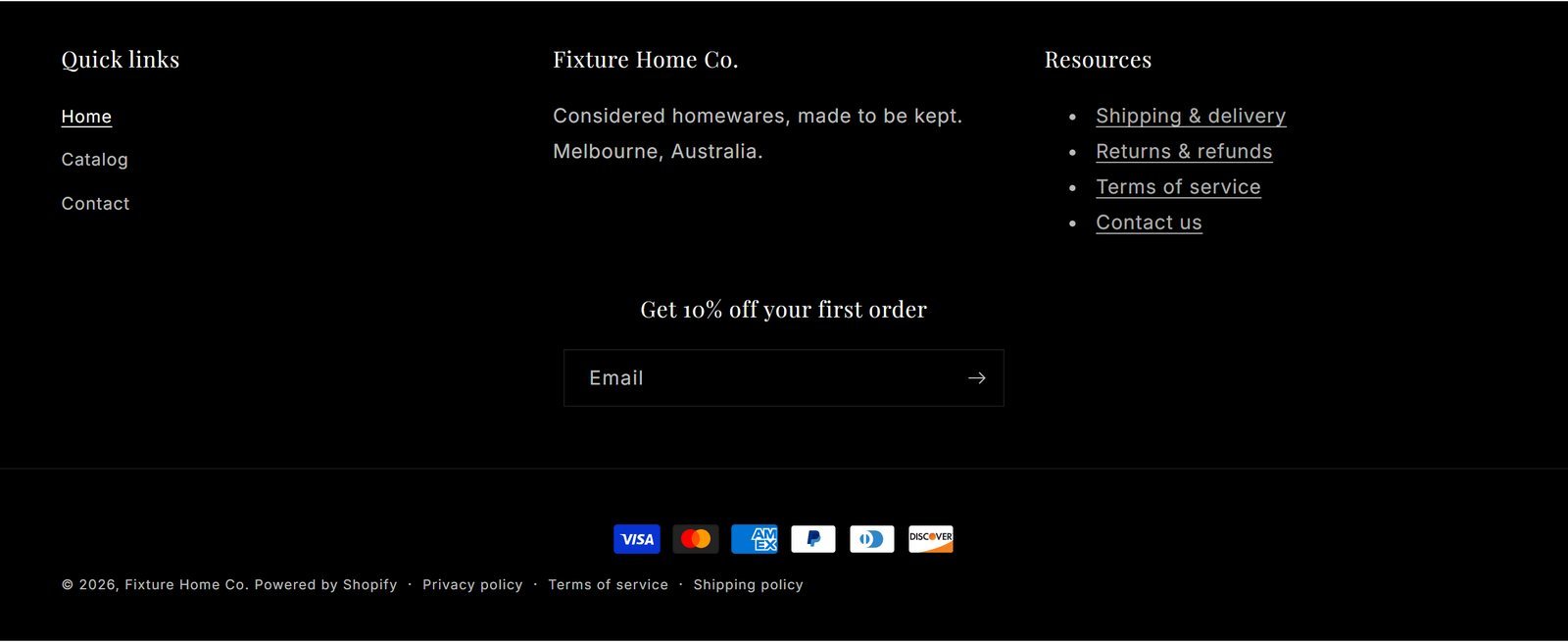


AggregateRating markup so stars can show in Google.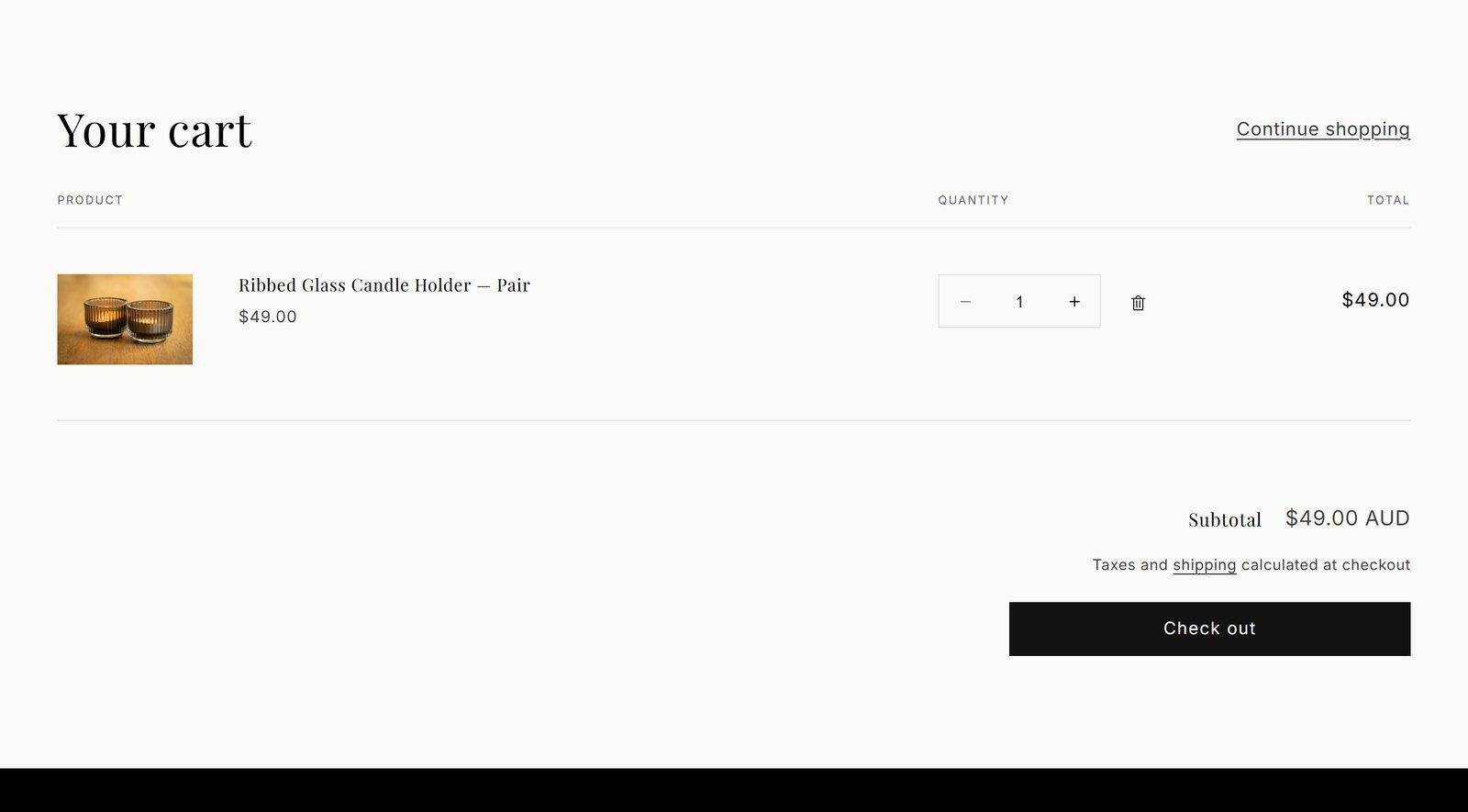
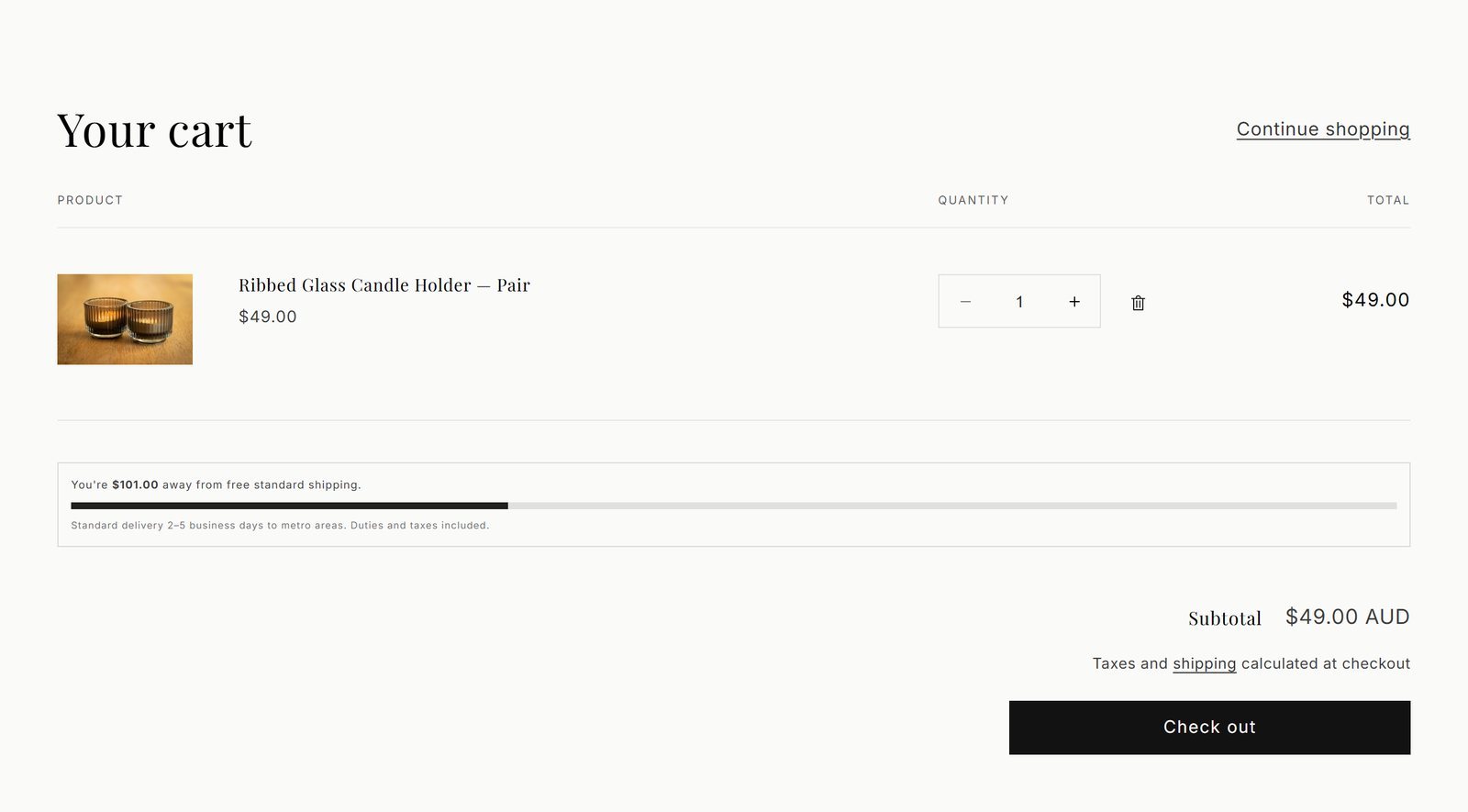
About these screenshots: they are taken from a demonstration store we built and control, so we can show a defect and its fix on the identical page. They are not a real merchant’s shop. Our published teardowns of Budgy Smuggler and Rollie Nation are real stores, with dated evidence.
Every teardown we publish names the store and shows the evidence. We also go back and re-check them, because a finding that was true in July might not be true today — and a report you cannot trust the date of is not worth reading. All three were re-verified on 1 August 2026.
We claim no credit for the fixes and have no evidence of cause. The alternative explanation is ours to own: content that only loads once a visitor scrolls can be missed by an audit that does not scroll, and we have since added a scroll-and-verify step before any finding is published or emailed. Either way, the dates and the current status are on every report.
Core Web Vitals, dead app scripts still loading, hero media weight, lazy-loading done wrong.
Social proof, shipping answers at the decision moment, variant UX, size guides, schema.
Returns visibility, contact reachability, policy completeness, payment reassurance.
Capture, incentive strength, and whether the four core flows exist and fire.
Titles, structured data, collection-page copy, index hygiene — the rankings you're forfeiting.
Express payment coverage, cart clarity, surprise-cost signals, abandonment triggers.
That's the entire onboarding. No discovery call, no access needed — we audit what your customers actually see.
Automated engine plus analyst review across your public storefront. Same depth as the sample, every time.
Prioritised by impact, actionable without us. Highest-impact fixes first, so your developer knows exactly what to change next.
The analysis is done by AI, reviewed by a human before it ships, and priced like it — you're paying for findings, not meetings. We put this on the front page because the work stands on its own: judge the sample, not the org chart.
Checkout collects your store URL. Prefer to ask something first? Use the form.
Because the expensive part of an agency audit is the humans in meetings, not the analysis. Our engine plus AI analyst does the work; a human reviews it before it ships. Same rigour, none of the theatre.
No. We audit the storefront your customers actually experience — which is where the leaks are. If you later want fixes verified against your analytics, that's your call to share.
Then you get a short report saying so and your money back. That's the deal, and it's in writing above.